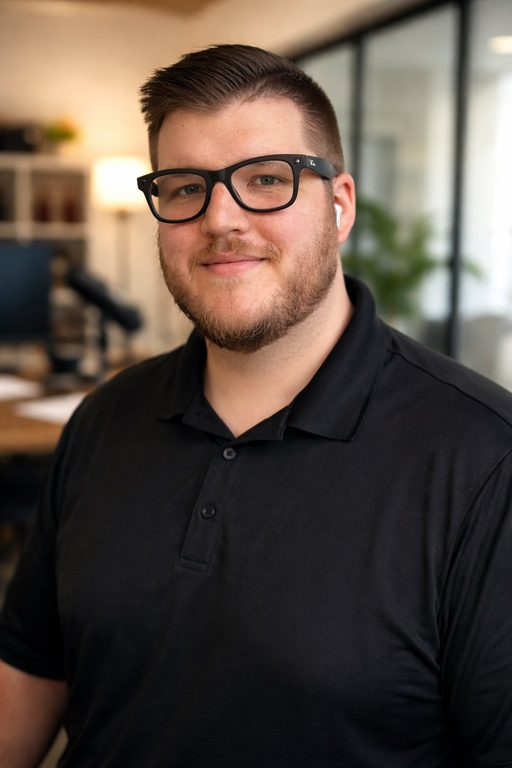
Fifteen years of making high-stakes technology work.
My background doesn't fit neatly into one category — and that's intentional. Over the past 15 years I've built systems, managed live sessions, trained teams, and troubleshot in real time across every kind of organization you can imagine. Government agencies running public hearings. Universities hosting global academic conferences. Nonprofits trying to stretch a limited budget as far as it will go. Corporations with audiences spanning a dozen time zones.
What all of those have in common: the people leading them were experts in their field, not in technology. A policy director shouldn't have to know what a codec is. A university dean shouldn't be managing Zoom settings five minutes before a keynote. My job — every time — was to make the technical side completely invisible so the right people could focus on what they actually do best.
I've built workflows from scratch, trained people to run platforms they'd never touched, and managed sessions for hundreds of simultaneous participants across continents. When something goes wrong — and in live production, something always eventually goes wrong — I'm the one who fixes it before anyone else notices it happened.
The moment that made Storyline inevitable.
Not long ago I crossed paths with someone who stopped me in my tracks. She's highly educated, deeply connected, and a compelling speaker on advocacy work that genuinely helps families navigating some of the hardest challenges imaginable. The kind of person whose voice, if more people heard it, would make a real difference.
She had tried for years to build a consistent show. She'd start, stall, start again. Not because she lacked content — she had more than she could ever use. Not because she lacked an audience — people were hungry for exactly what she had to say. She stalled because running a show meant managing a freelance editor, a separate social media person, someone for the Zoom sessions, someone else for LinkedIn content — all while maintaining a full schedule, speaking engagements, and the rest of her life. The cost alone was prohibitive. The coordination was exhausting. So the show just… didn't happen.
“There are people who need her wisdom right now, and they can't find it — because the logistics got in the way.”
That stayed with me. Because I looked at everything she was trying to stitch together and realized: I already do all of that. Not separately — together, under one roof, as one person who understands how each piece connects to the next. Storyline Creative is the answer I wished I could have handed her that day.
If you have something worth saying, the production should never be the reason people don't hear it.
How I think about this work.
I think of myself as an invisible expert. My job isn't to be noticed — it's to make you look and sound exactly as good as you actually are. The best version of your show is the one where your audience is completely absorbed in what you're saying, with no awareness of the production behind it.
That's why there's always a live producer in every session — not just hitting record and hoping for the best, but actively monitoring audio, managing guests, and solving problems before they become problems. In high-stakes environments, and every recording session is high-stakes to us, a technical issue caught during the session is one that never shows up in the edit, never costs you a retake, and never reaches your audience.
I also think consistency is the most underrated quality in podcasting. Talent matters. Content matters. But the shows that actually build audiences are the ones that show up reliably, week after week. Part of what I do is make that consistency the easy choice — removing every friction point that might make you want to skip a month, delay a session, or let the show quietly wind down.
We keep a deliberately small client roster. Not as a limitation — as a commitment. Every show we take on gets real attention, real familiarity with the content, and a team that knows your voice well enough to know which moments deserve to be clips and which ones should stay in the edit.
A team built around your show.
Storyline Creative isn't a solo operation — it's a network of skilled technical professionals I've worked alongside for years. Every show is led by me, but backed by talented people I trust with high-stakes work. That means when your show grows, we grow with it. And if something ever needs an extra set of hands, those hands are already vetted, already capable, and already part of how we operate.
On the production side, we record all sessions through Riverside — the industry standard for remote podcast recording. It captures lossless audio and up to 4K video on separate tracks for every participant, entirely in the browser. No software to install, no complicated setup for your guests. You show up to a link, and we handle everything from there.
The editing, distribution, social content, and written deliverables are all handled by people who do this at a professional level — coordinated, quality-checked, and delivered on schedule every month. You'll always have a single point of contact. But you'll never be limited by a single person's bandwidth.